

Research Showcase highlights AI innovation at Purdue
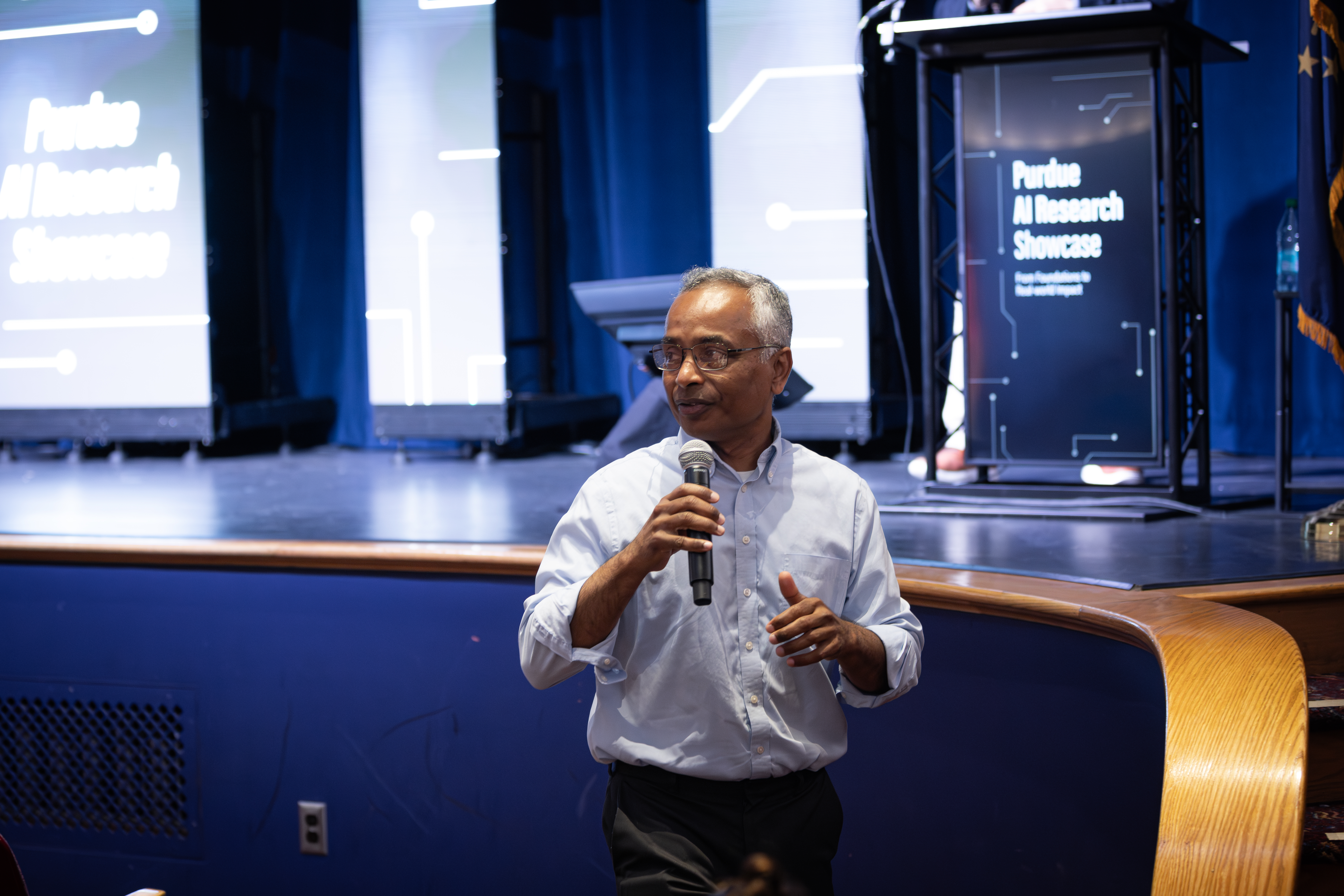
This spring, the Institute for Physical Artificial Intelligence (IPAI) and the Rosen Center for Advanced Computing (RCAC) hosted the Purdue AI Research Showcase. The showcase, which took place on April 14th and 15th at Purdue’s West Lafayette campus, was a huge success, bringing together AI experts, practitioners, and learners from across the university to learn about the AI research and innovation taking place at Purdue.
Day 1
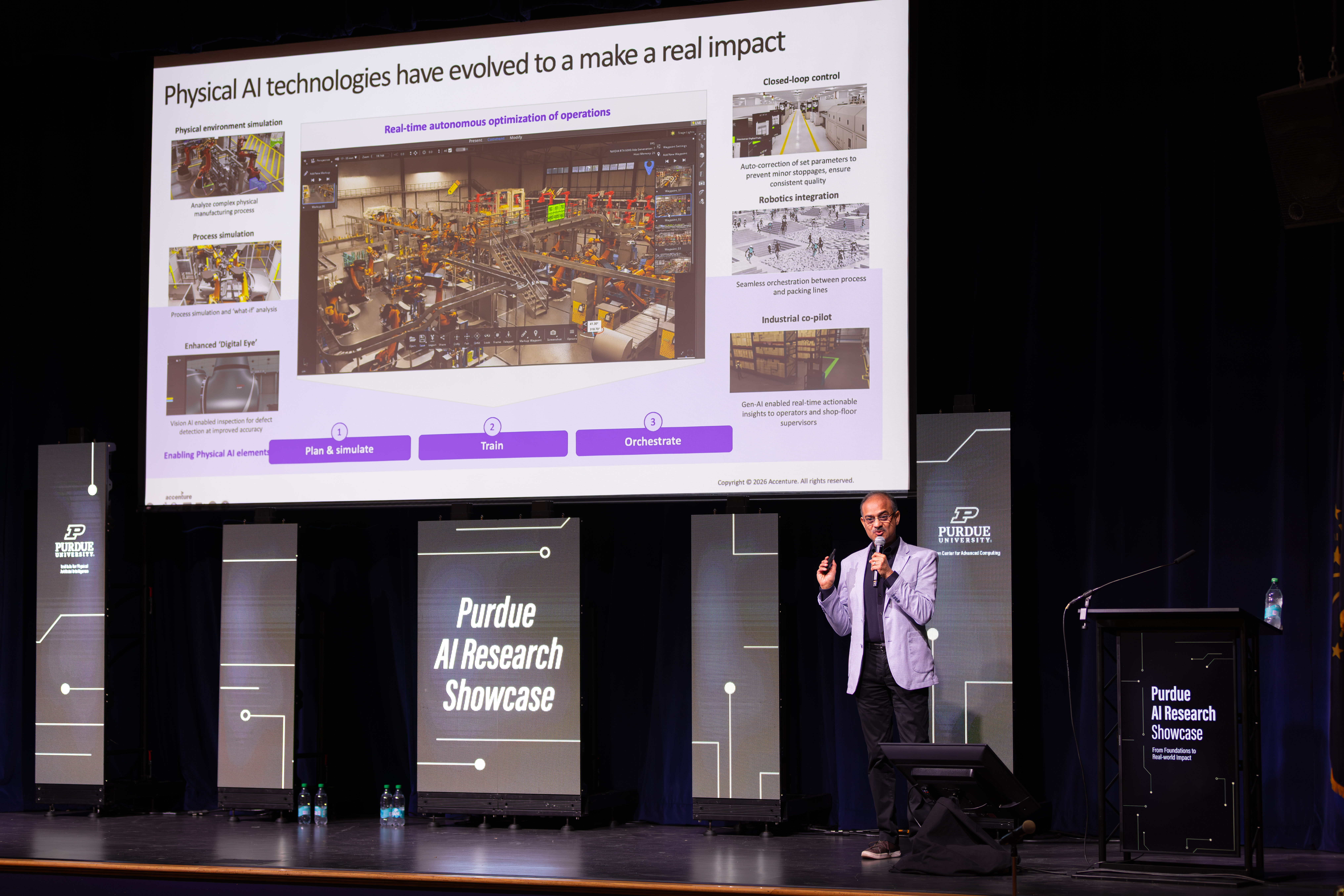
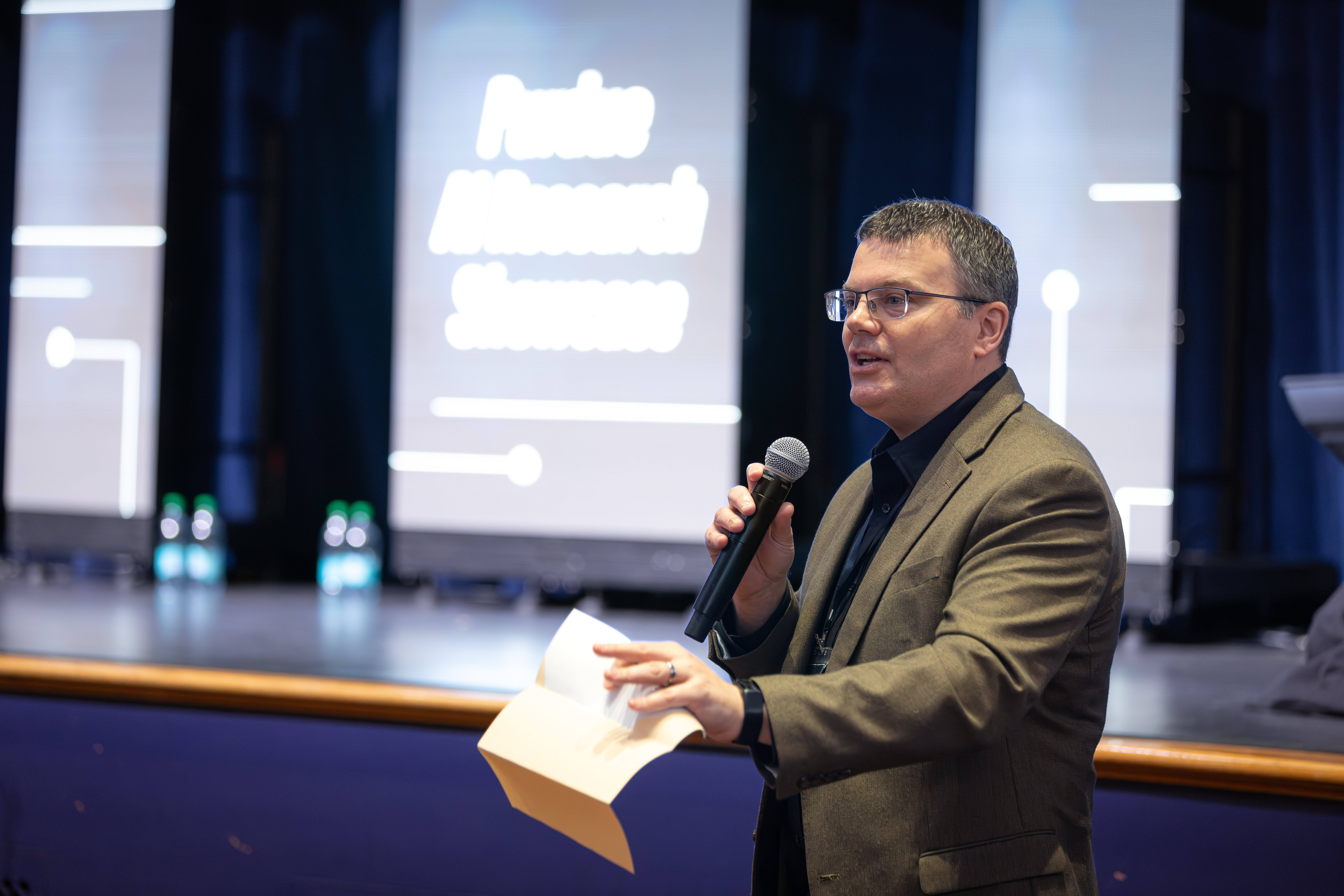
The first day of the 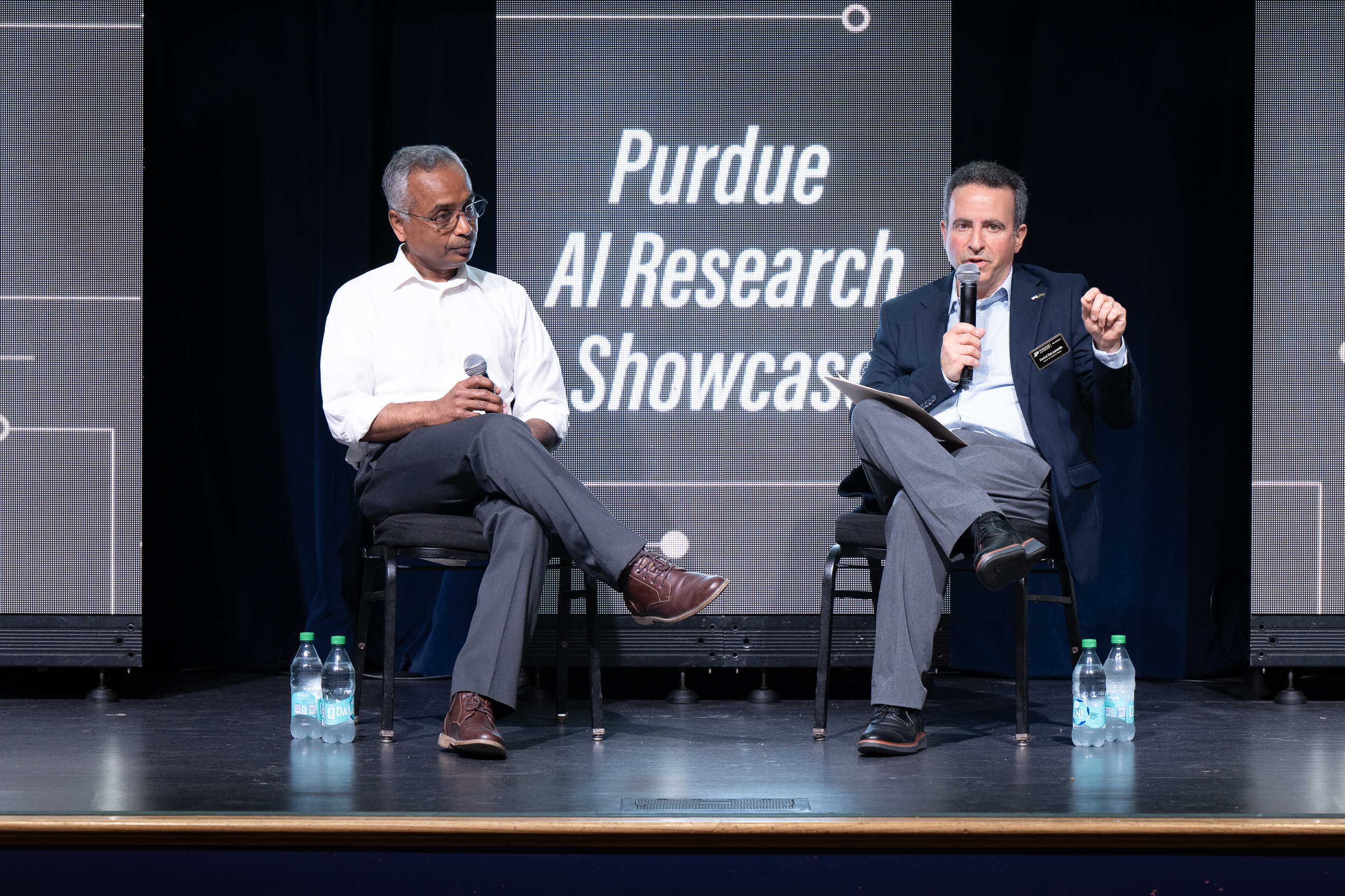 Purdue AI Research Showcase had an impressive start, setting the tone for the two-day event. After a complimentary breakfast for attendees, Dan DeLaurentis, the Executive Vice President for Research at Purdue, took to the stage in Fowler Hall to deliver opening remarks. This transitioned into the first keynote session of the day, a fireside chat between DeLaurentis and Ananth Grama, the director of IPAI. The pair discussed the state of AI research at the university as well as the research funding landscape nationwide. The fireside chat was followed by the second keynote for the day, presented by Prasad Satyavolu, the Global Lead for Manufacturing & Operations and Physical AI at Accenture. Satyavolu’s presentation was titled “Reimagining the Future Factory with Physical AI.” He discussed how the evolution of AI is rapidly driving intelligence into real-world manufacturing systems and what this means for factories in the future and their workforce. The final keynote for Day one was delivered by Hoifung Poon, a General Manager for Microsoft. Poon’s presentation focused on AI use for medical discoveries, covering his research into how multimodal generative AI can be used to learn the language of patients and create a virtual patient world model as digital twin for forecasting disease progression and treatment response. Following the final keynote of the day, presenters and attendees broke for lunch—provided by IPAI—before reconvening for an afternoon filled with networking and learning.
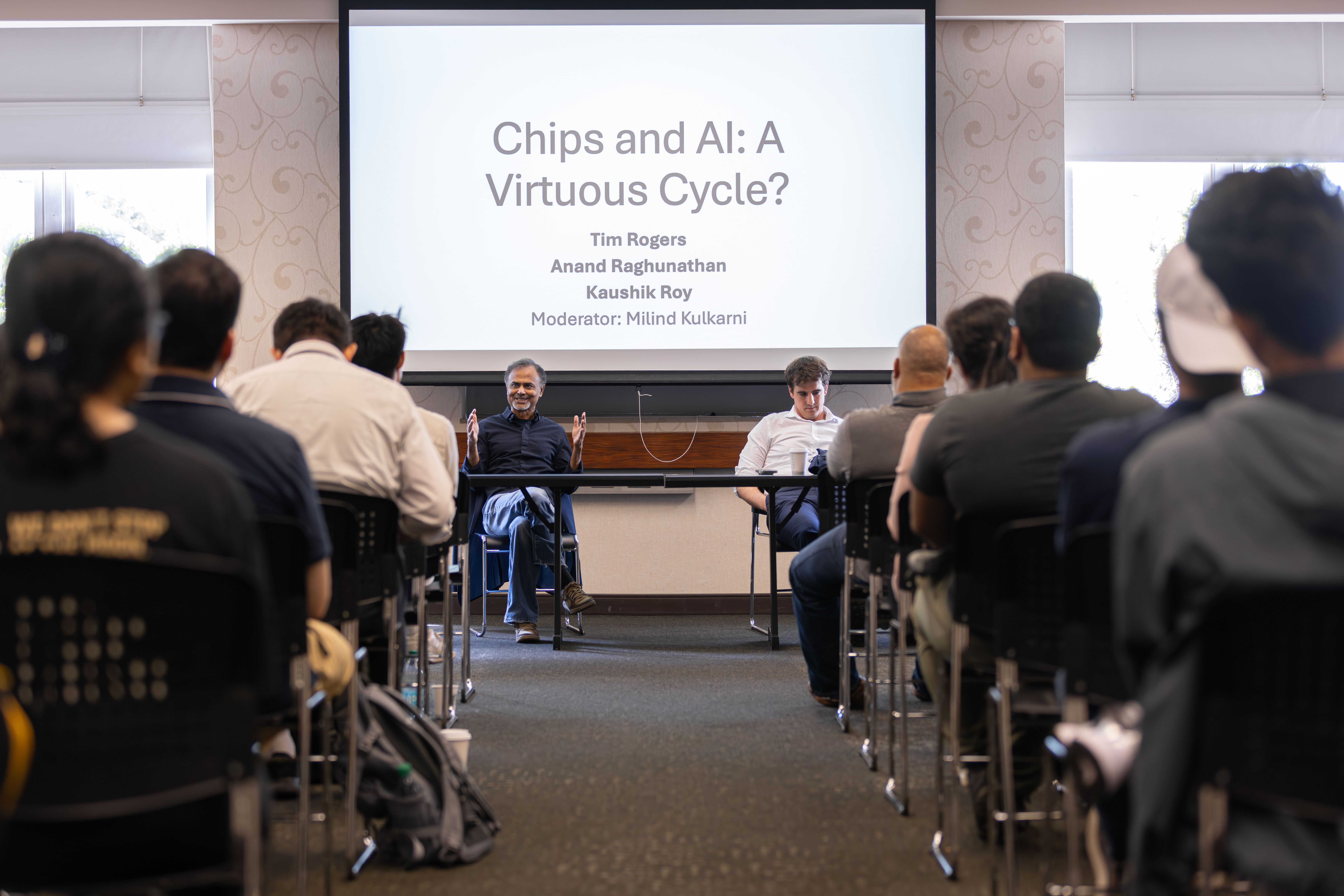
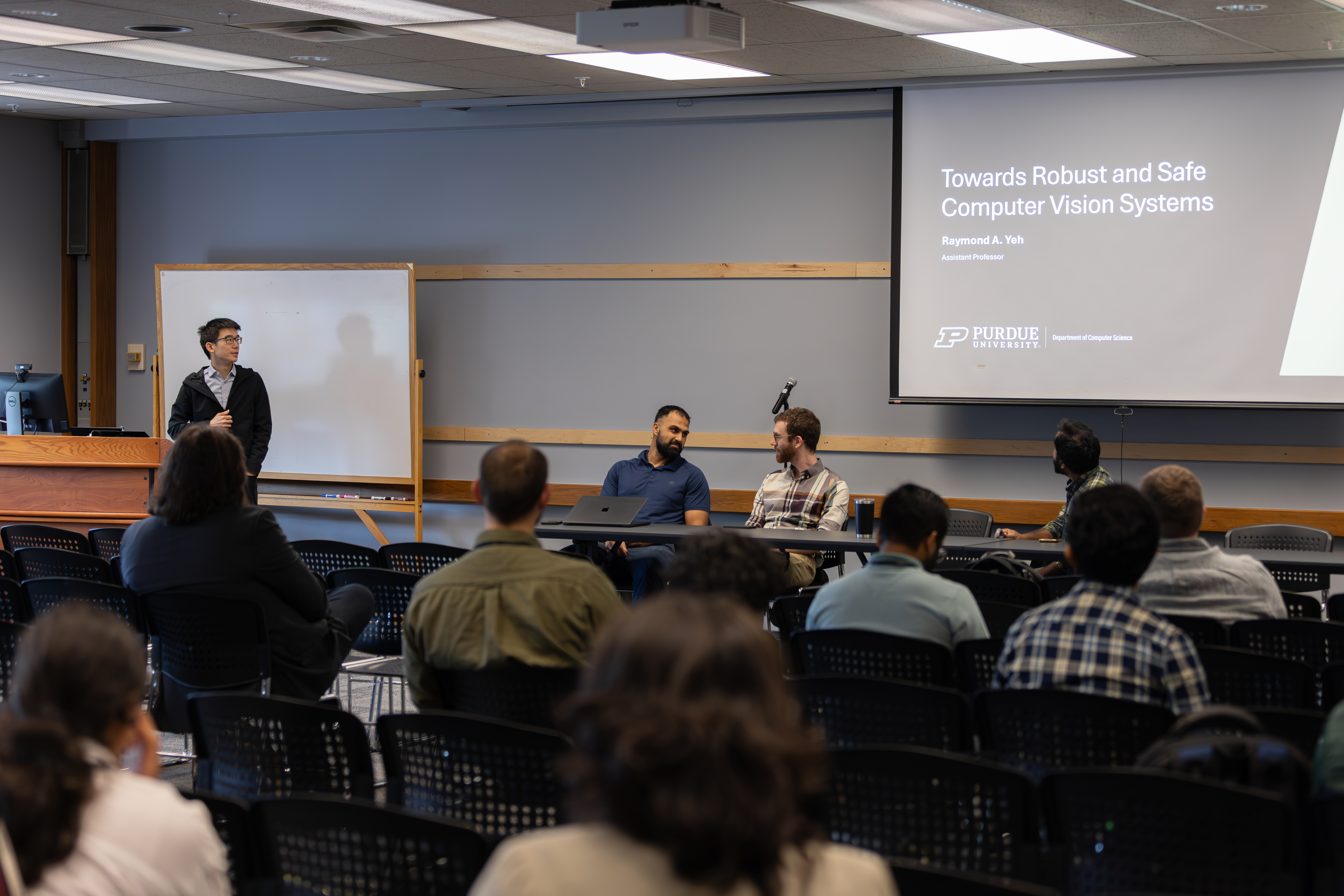
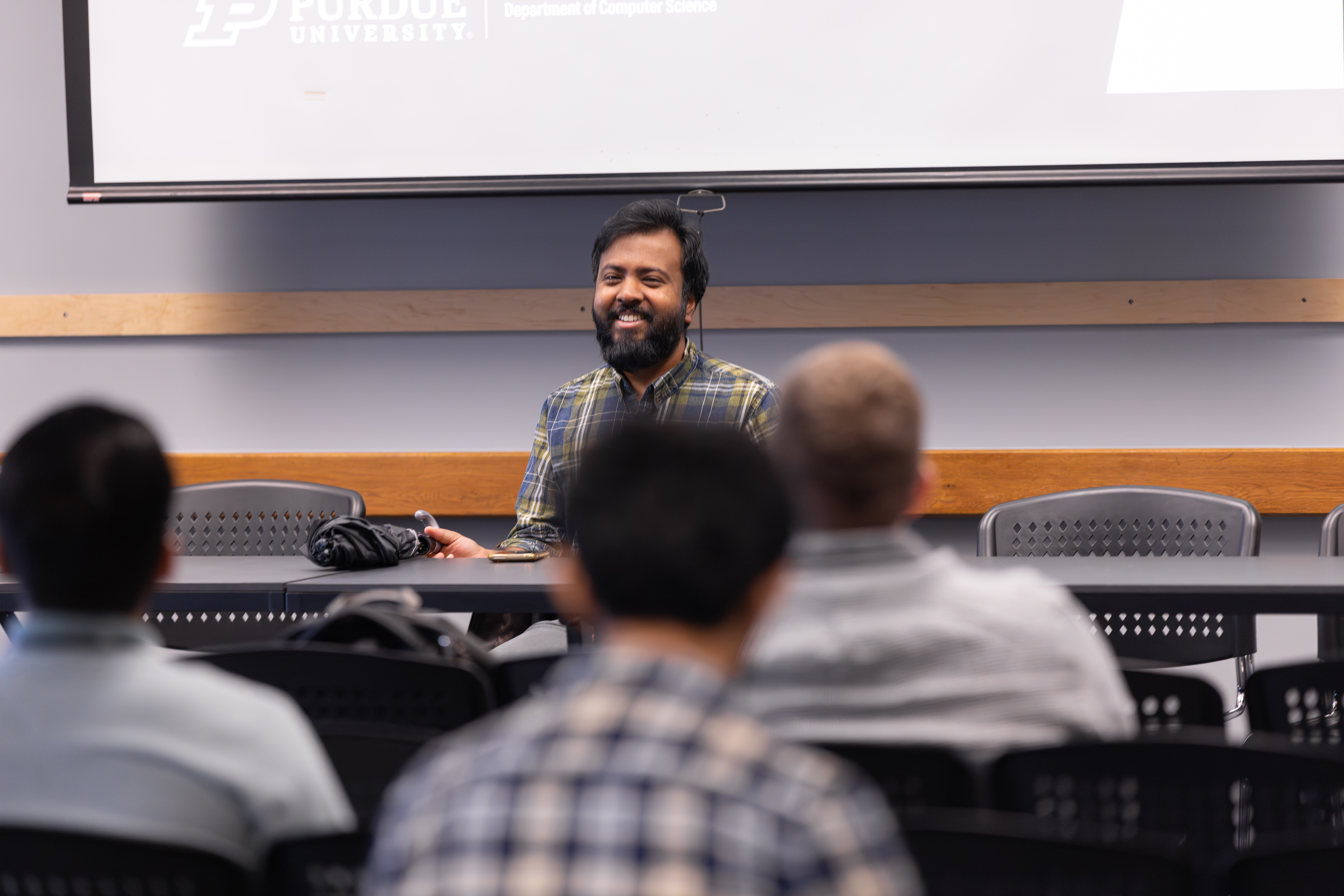
Eight breakout sessions were held on the first day of the research showcase, wherein attendees could learn about the wide variety of AI research taking place at the university. These breakout sessions were as follows:
- AI and Chips: A Virtuous Cycle?: Timothy Rogers, Kaushik Roy, Anand Raghunathan, and Milind Kulkarni
- Robotics and Embodied AI: Aniket Bera, Zachary Kingston, Yan Gu, Yu She, Raymond Yeh, Rohan Paleja
- Human Interaction, Trust, and Deception in AI: Daniel Schiff, Lisa Argyle, Kaylyn Jackson Schiff, and Aaron Mendon-Plasek
- Integrating AI into Government Transportation Agencies: Darcy Bullock, Jinha Jung, and Satish Ukkusuri
- AI in Agriculture: Current Status and Opportunities: Ignacio A. Ciampitti, Christian Cruz, Upinder Kaur, and Hinayah Rojas
- AI and Autonomous Systems: Shaoshuai Mou, Shreyas Sundaram, and Ziran Wang
- AI Across Living Systems: From Cells to Crops to Forests: Matthew Tegtmeyer, Mitchell Tuinstra, and Bina Thapa
- AI Implementation on Manufacturing Floor: Martin Byung-Guk Jun, John Sutherland, Ragu Athinarayanan, and Eunseob Kim (on behalf of Ali Shakouri)
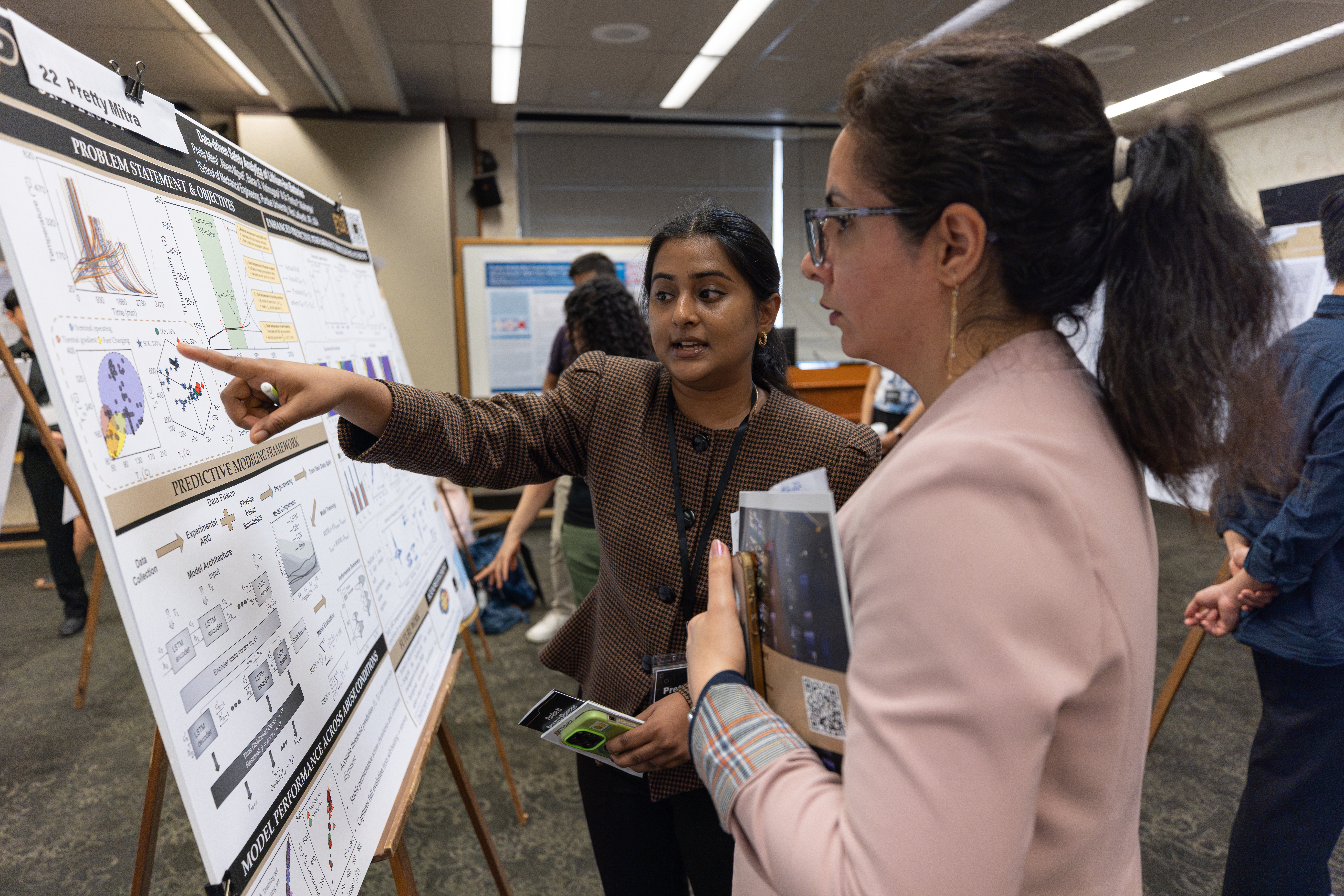
To cap off Day 1 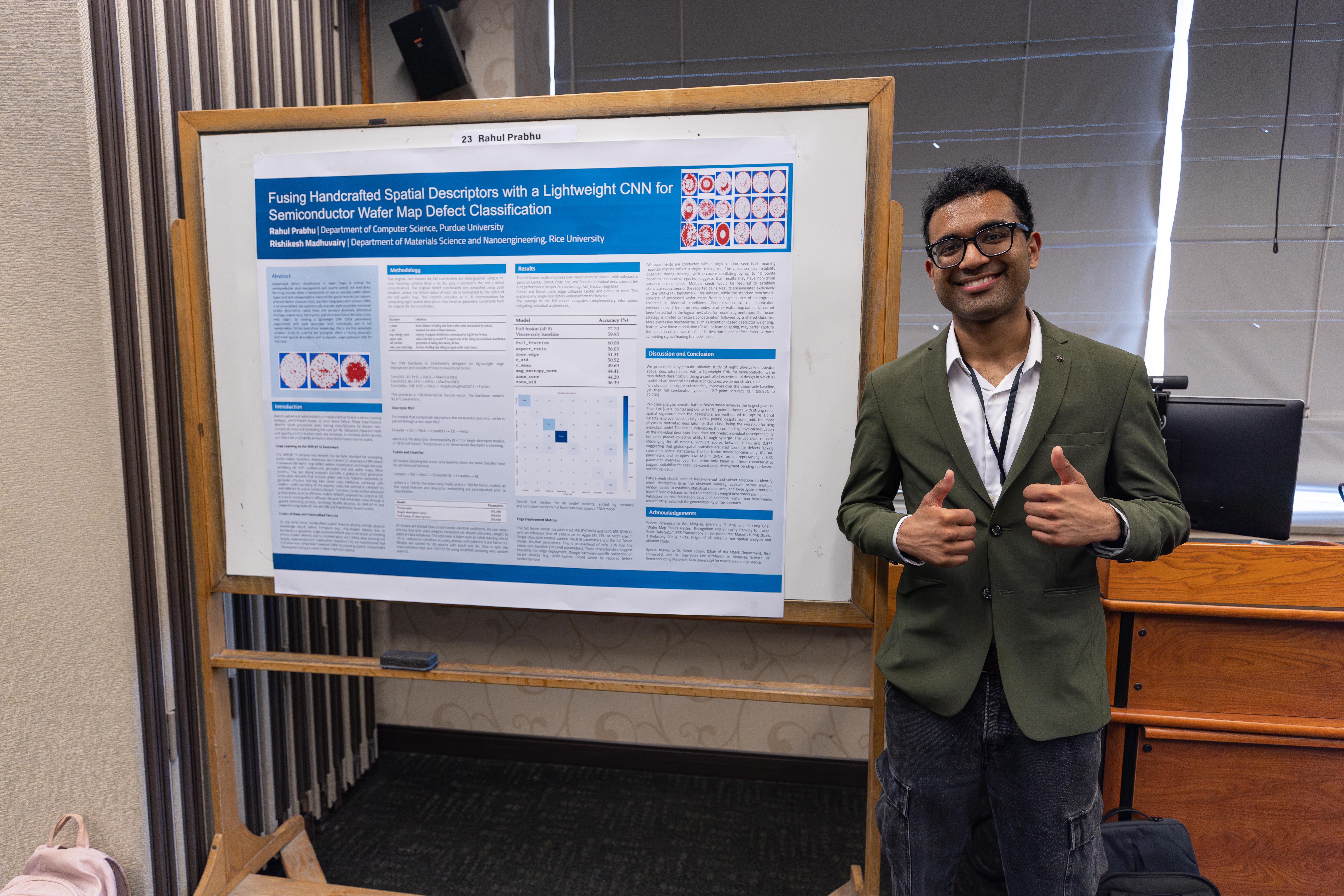 of the showcase, a reception was held in combination with a student poster session. Over 40 posters were submitted by students working on research that either relied heavily on AI systems or aimed to innovate and improve AI capabilities for science. Judges viewed each poster and allowed the student researchers to present their work in a quick, elevator-pitch format. IPAI and RCAC would like to extend congratulations to Rahul Prabhu and Rishikesh Madhuvairy for winning Top Poster Award with their submission, titled “Fusing Handcrafted Spatial Descriptors with a Lightweight CNN for Semiconductor Wafer Map Defect Classification.” As part of the award, Prabhu and Madhuvairy will receive travel expense coverage of up to $1,000 to a conference of their choice.
Purdue’s AI Expertise
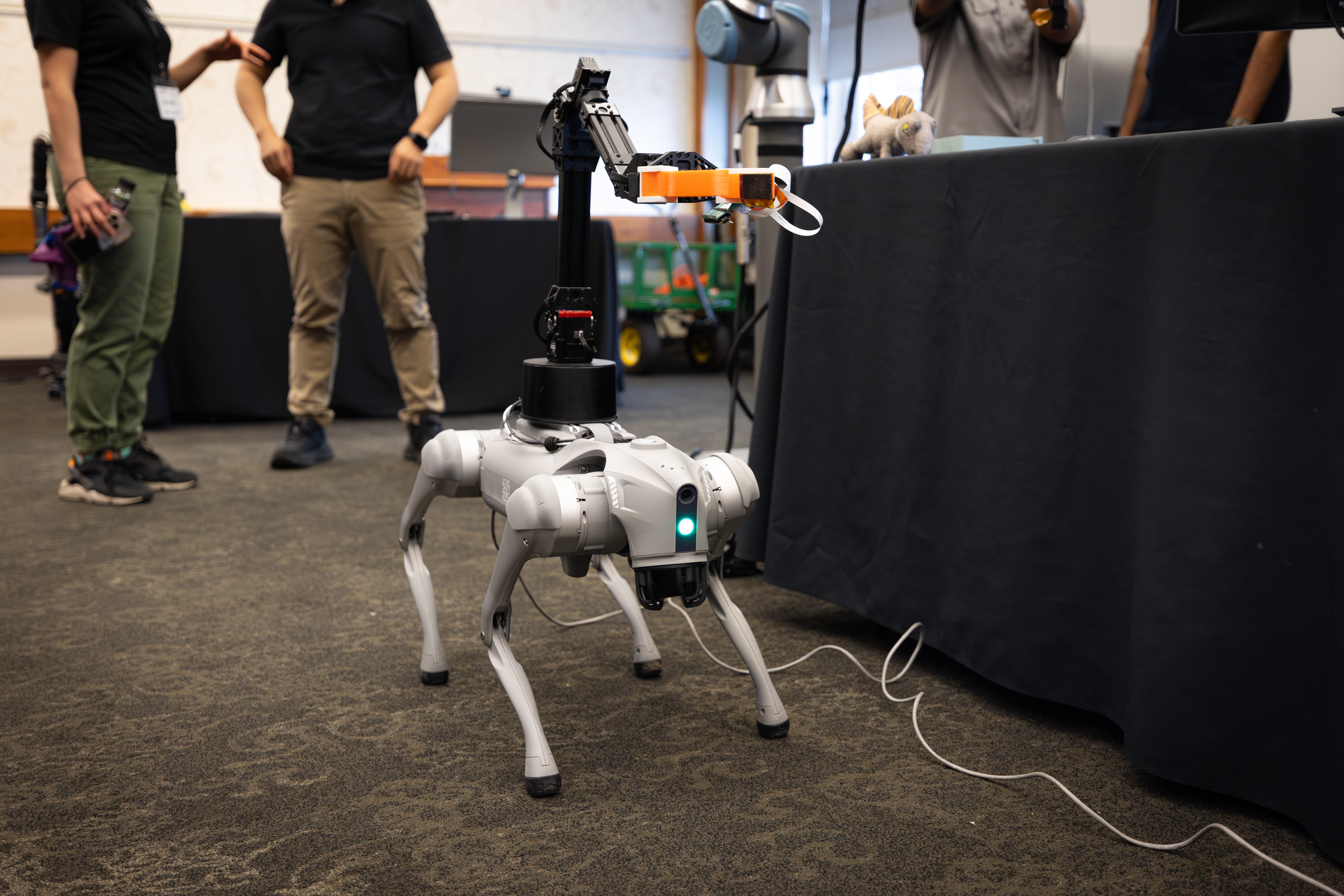
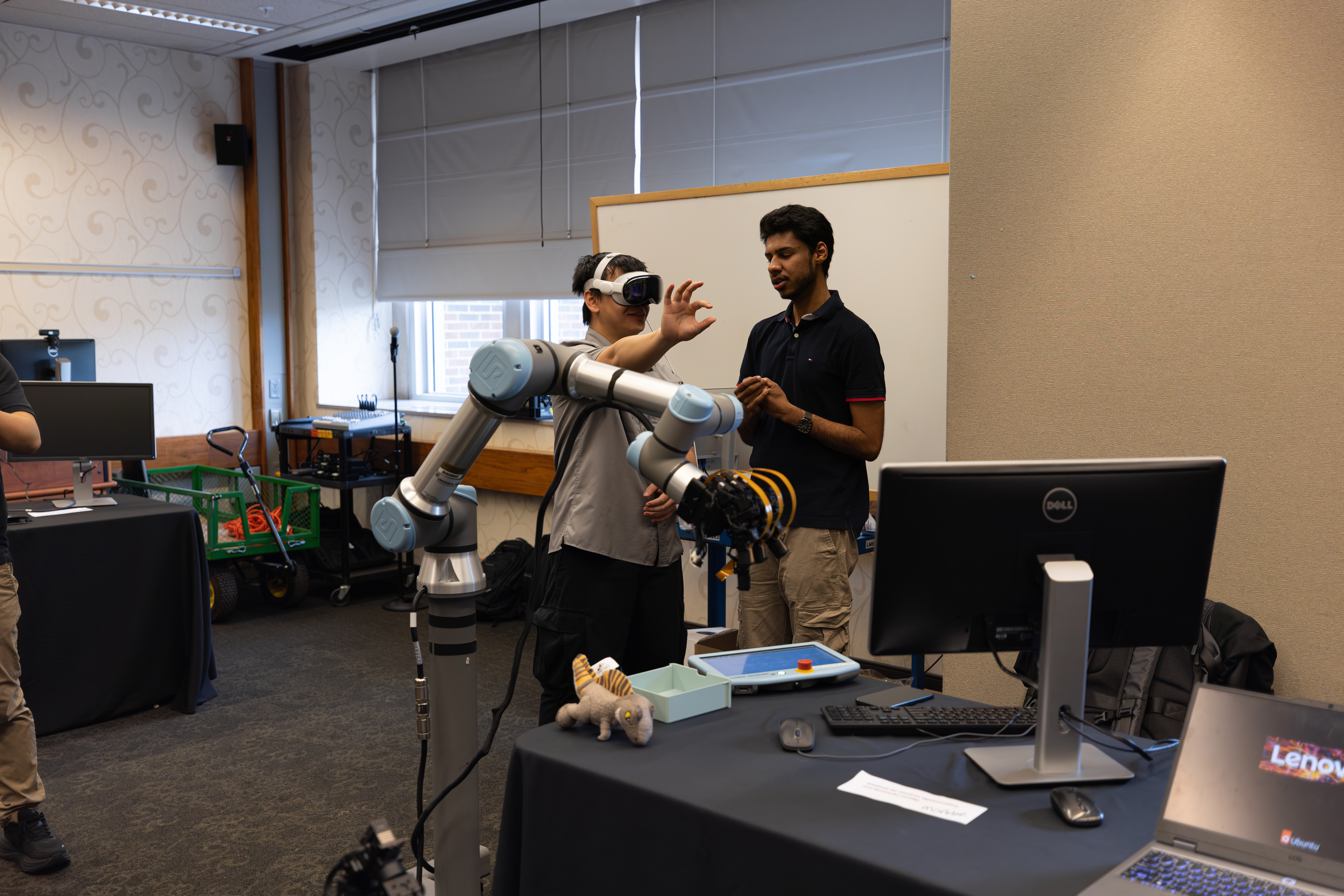
Throughout the first day, the Purdue AI Research Showcase also hosted an Exhibit Hall with 12 booths from key AI Research Centers and Institutes at Purdue. Attendees could visit the Exhibit Hall and engage directly with representatives from each center, learning about their innovative work and, in some cases, see live demonstrations of physical AI in action (robots!). The list of the AI Research Centers and Institutes includes:
- Center on AI for Digital, Autonomous and Augmented Aviation (AIDA3)
- Center for Education and Research in Information Assurance and Security (CERIAS)
- Institute for Control, Optimization, and Networks (ICON)
- Institute for Digital and Advanced Agricultural Systems (IDAAS)
- Intelligent Design for Exploration and Augmented Systems (IDEAS) Lab
- Indiana Manufacturing Competitiveness Center (IN-MAC)
- Institute for Drug Discovery
- Multi-Scale Robotics and Automation Lab (MSRAL)
- Purdue Energetics Research Center (PERC)
- Purdue Policy Research Institute (PPRI)
- Rosen Center for Advanced Computing (RCAC)
- Governance and Responsible AI Lab (GRAIL)
Day 2
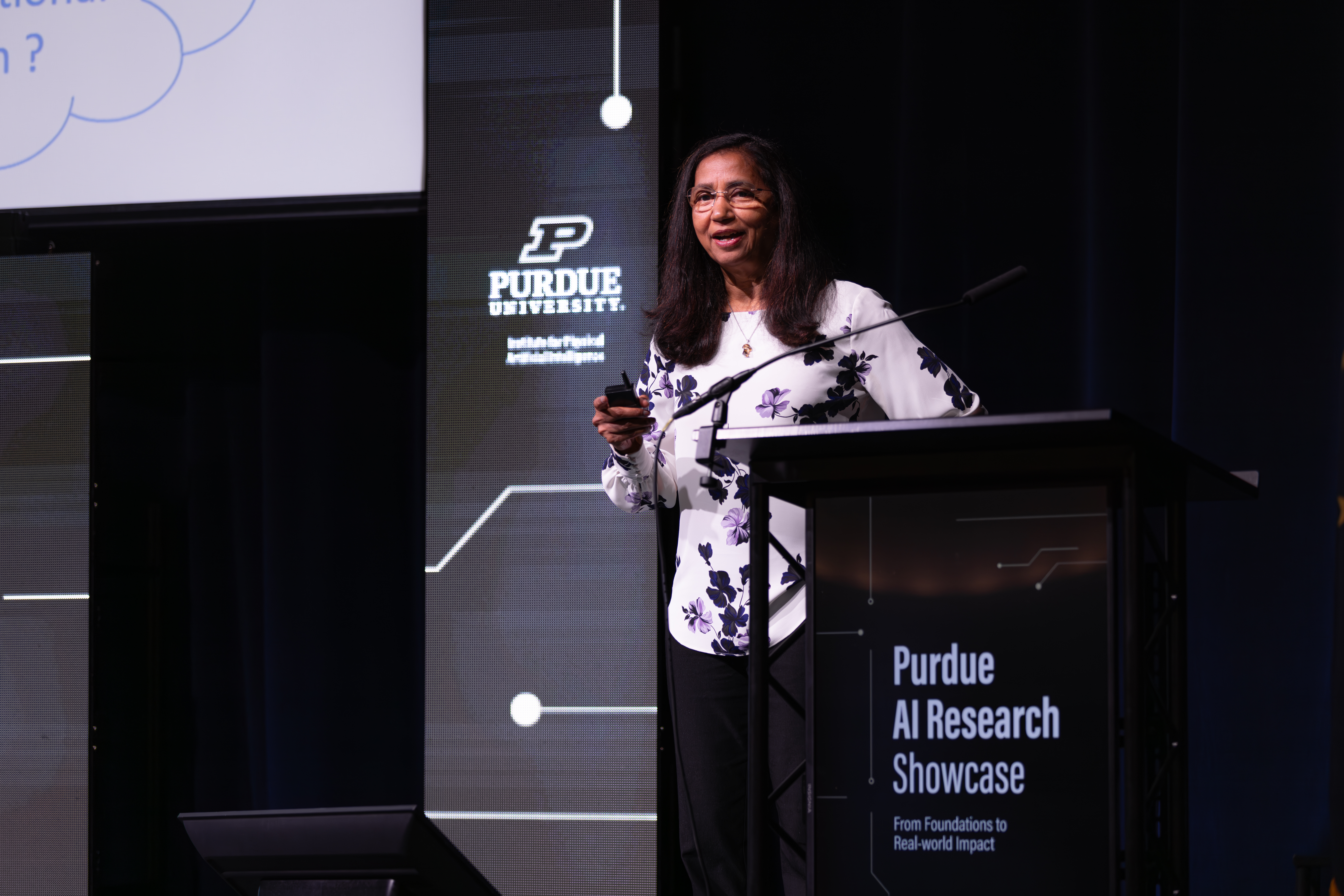

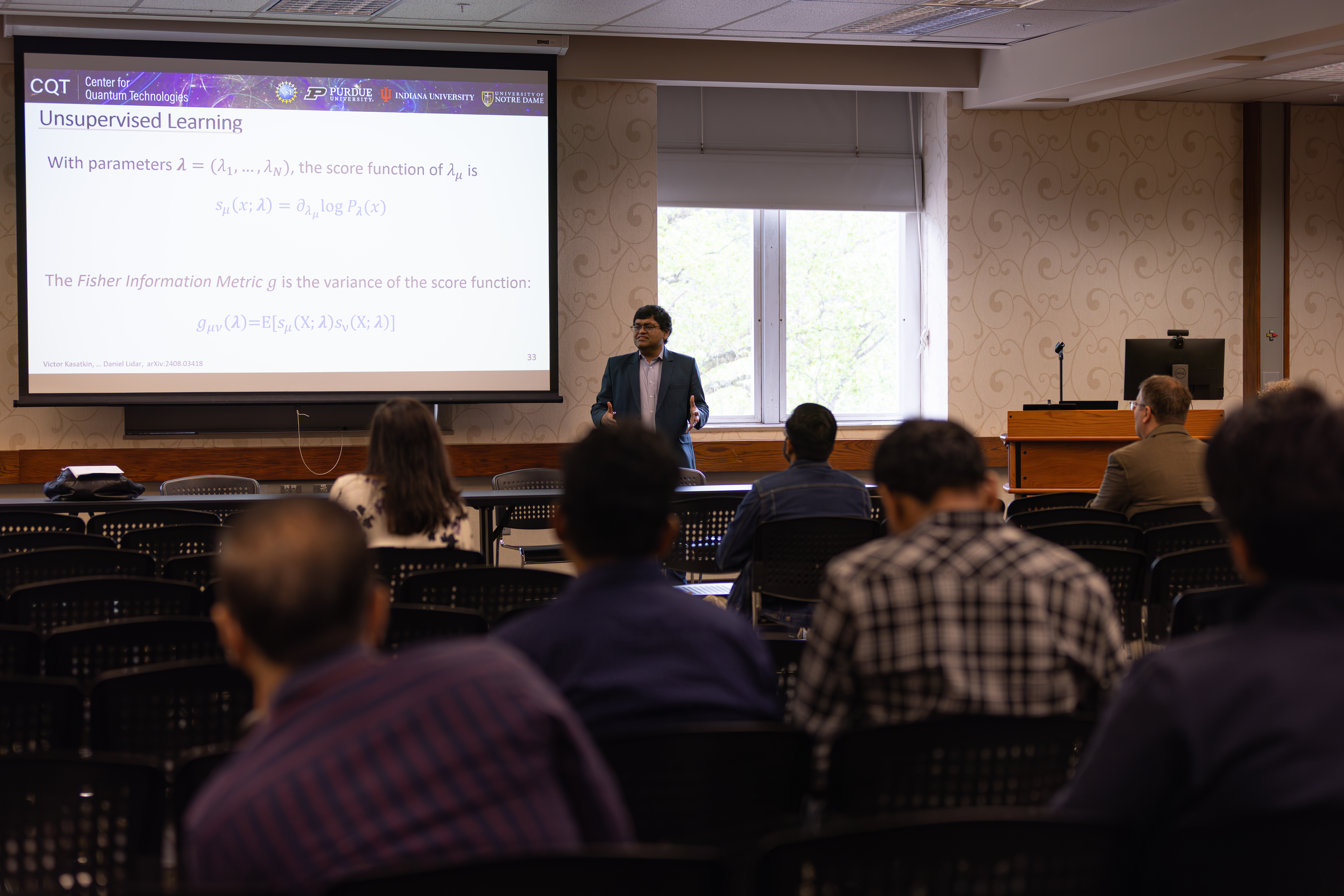
The second day of 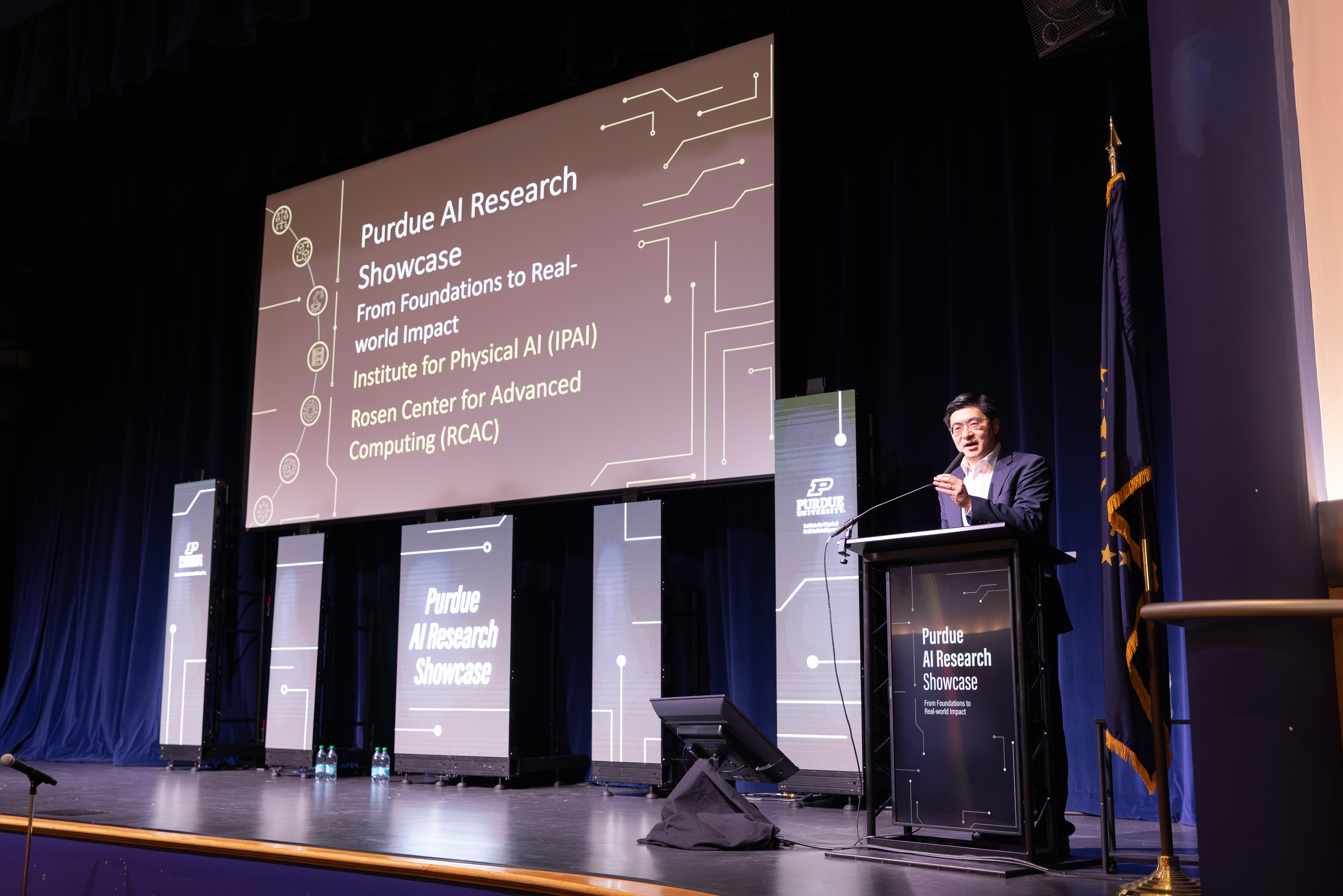 the Purdue AI Research Showcase proved to be just as impactful as the first. Breakfast was again provided for all attendees. Afterwards, Purdue President Mung Chiang opened up the sessions for the day by providing remarks on AI, its effects on higher education and research, and how Purdue is leading the charge in AI research. The first keynote presentation was given by Laxmi Parida, an IBM Fellow and global team lead for Quantum for Healthcare Life Sciences (HCLS) at IBM. Her presentation, titled “Evolving Computational Landscape: Opportunities for Life Sciences,” discussed the intersection of quantum computing and AI, highlighting varied life science problems that are poised to gain from this computational leap. Following Parida, the final keynote of the showcase was delivered by Dragos Margineantu. Margineantu is the Senior Technical Fellow and Artificial Intelligence (AI) Chief Technologist at Boeing. His presentation covered AI for high-risk, safety-critical systems, such as automated aircraft taxiing and flying, and discussed how AI systems need to be robust even in novel scenarios or when lacking a complete real-world model on which to train.
Day 2 of the research showcase held two more breakout sessions before transitioning into hands-on workshops. The breakout sessions included:
- AI and Physics: Quantum Materials and High Energy Particle Physics: Erica Carlson and Arnab Banerjee
- AI and Computational Science: Guang Lin, Yexiang Xue, Wojciech Szpankowski, and Chuanhai Liu
Three hands-on workshops were included in the agenda to provide attendees with tangible, actionable learning experiences that enable them to better utilize AI in their own work. These workshops were extraordinarily popular amongst the research showcase attendees, with demand far surpassing the registration limit for each session. In light of this, IPAI and RCAC are working on future hands-on AI workshops, to be announced soon. The three workshops offered at the Purdue AI Research Symposium were as follows:
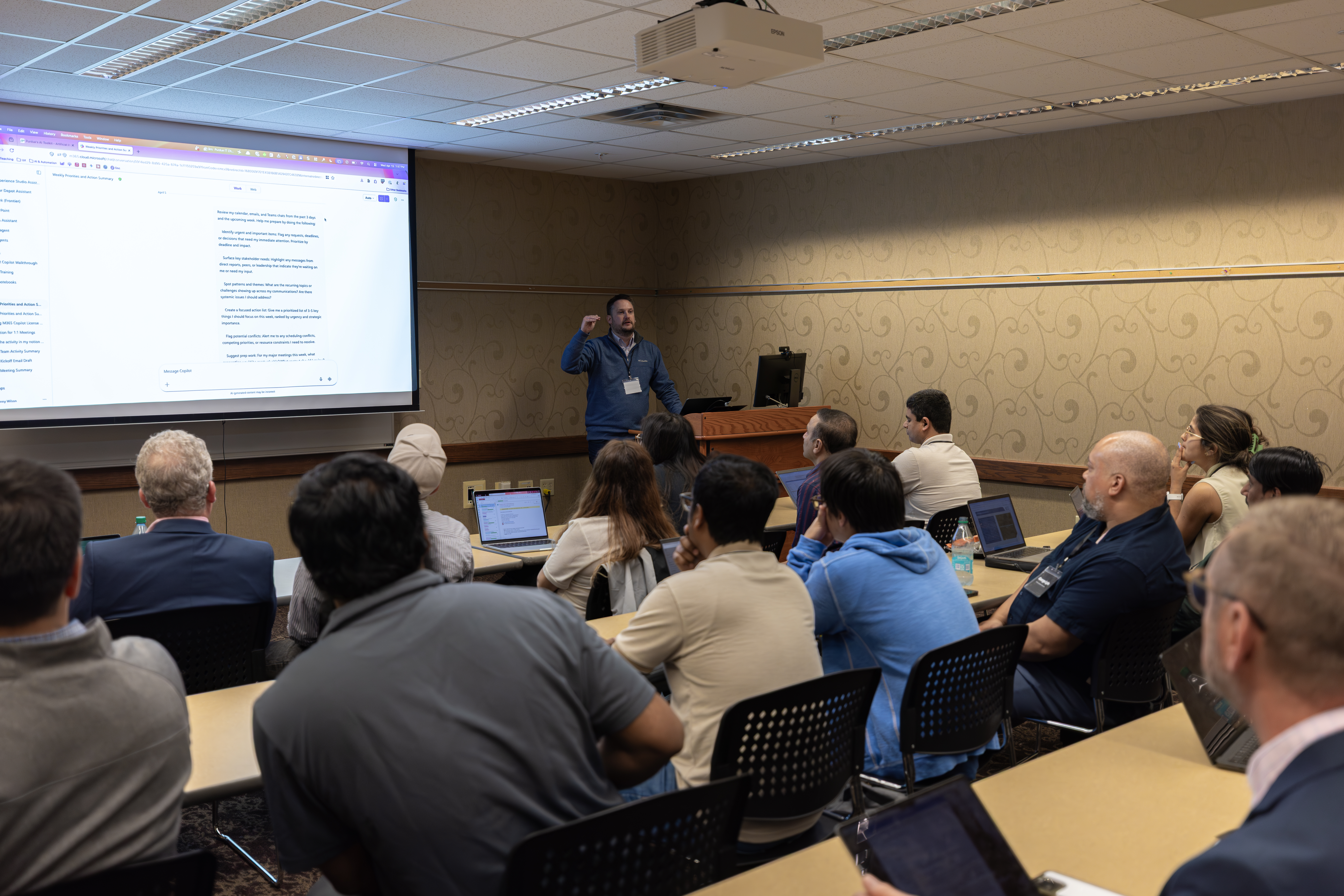
1) “AI at Work: A Hands-On Introduction to Microsoft 365 Copilot.” Presented by Kenny Wilson, the Director of AI and Automation at Purdue, this workshop explored how Microsoft 365 Copilot can enhance everyday productivity through practical, hands-on examples. Wilson demonstrated how to use AI to draft emails, summarize meetings, and streamline common workplace tasks, with attendees following along on their personal devices.
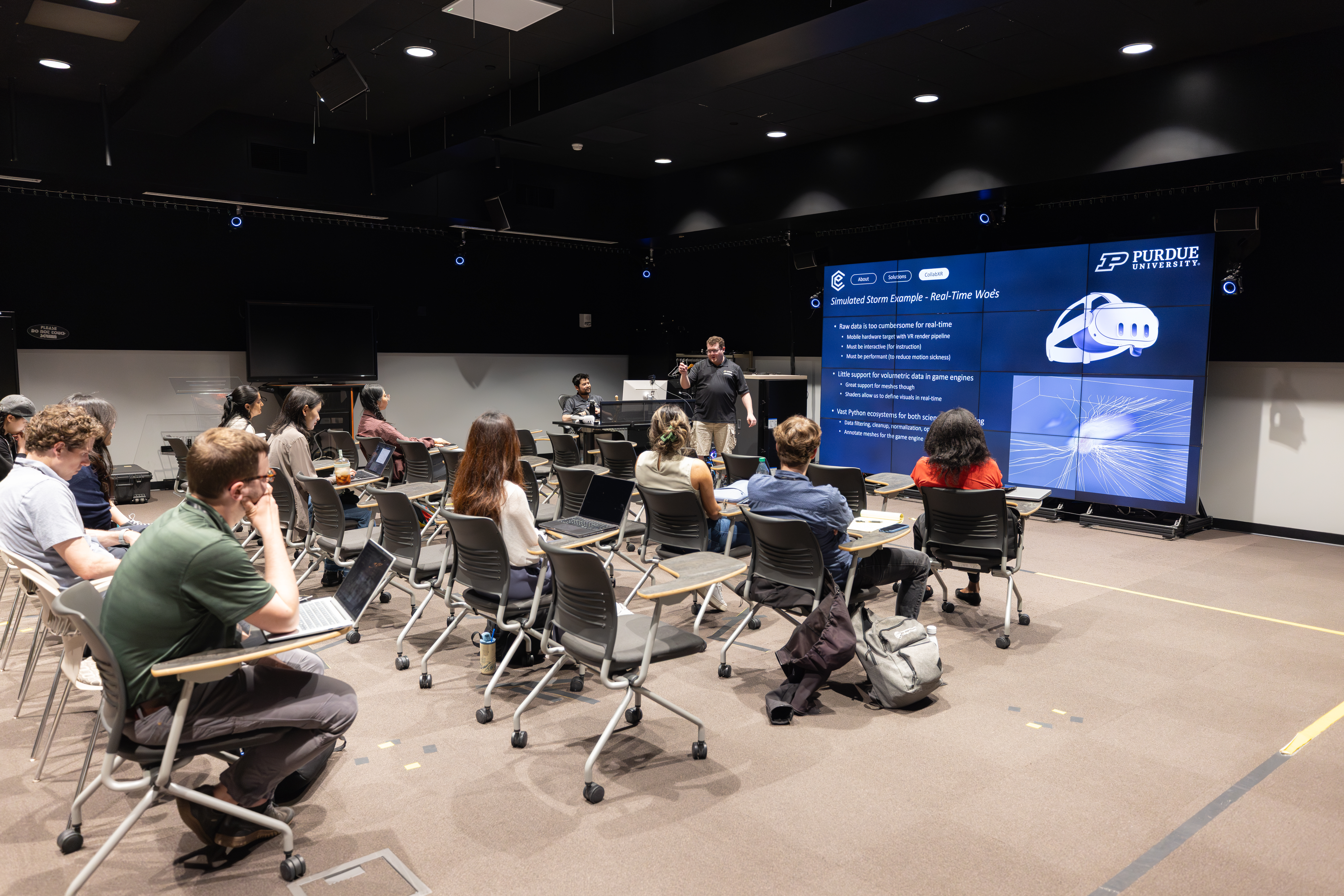
2) “Leveraging 3D and geospatial visualizations for collaborative exploration and communication in research.” Presented by George Takahashi, Principal Visualization Scientist at the Envision Center, this workshop walked attendees through the process of taking 3D data from a scientific visualization platform (specifically Paraview) and 3D modeling platforms (Blender), to ingest into the open CollabXR platform. CollabXR was built from the ground up at Purdue to specifically allow communication and shared exploration of scientific (and non-scientific) data for research, education and outreach. Takahashi also discussed alternatives and broader dissemination tools.
3) “Learn the Evolution 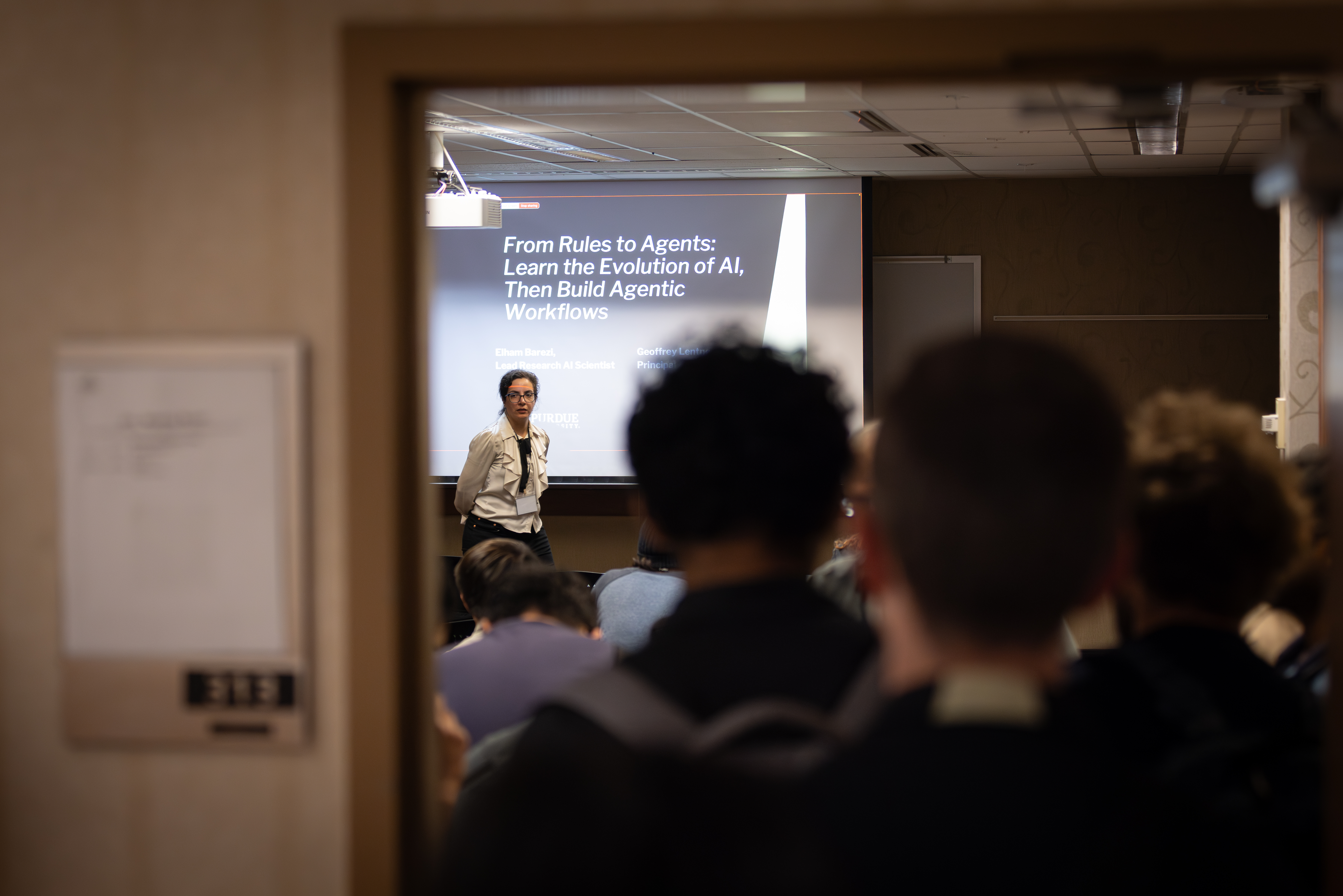 of AI From Rules to Agents, and Build Agentic Workflows.” Presented by Elham Barezi, Lead Research AI Scientist at RCAC and IPAI, and Geoffrey Lentner, Principal AI Scientist at RCAC, this workshop delivered a structured, big-picture overview of the evolution of AI, from early rule-based and symbolic systems to contemporary large language models and emerging agentic architectures. The first half of this two-hour workshop helped participants build a clear mental model of how AI has developed over time, enabling them to better understand the technological shifts shaping current and future systems, and to engage with these advances more confidently. The second half focused on practical implementation. Participants engaged in a guided, hands-on session to develop an agentic Retrieval-Augmented Generation (RAG) workflow, illustrating how retrieval, reasoning, and tool-use can be integrated into cohesive AI systems.
The Purdue AI Research Showcase was a monumental success, shining a spotlight on the strong research community on campus and highlighting why Purdue University is at the forefront of innovation in AI. To stay apprised of upcoming AI-related news and training, please subscribe to our RCAC newsletter and our IPAI mailing list.
The Institute for Physical Artificial Intelligence (IPAI) is Purdue’s hub for faculty collaboration at the intersection of AI and the physical world. IPAI connects researchers across disciplines to develop secure, robust, and deployable AI systems. Spanning models, hardware, robotics, autonomy, and ethics, IPAI helps apply these capabilities to shared research challenges and emerging opportunities across industry and government domains. To learn more, please visit https://ipai.research.purdue.edu/ or email ipai@purdue.edu.
RCAC operates the centrally-maintained research computing resources at Purdue University, providing access to leading-edge computational and data storage systems as well as expertise and support to Purdue faculty, staff, and student researchers. To learn more about HPC and how RCAC can help you, please visit https://www.rcac.purdue.edu/ or reach out to rcac-help@purdue.edu to request consultation.
Written by: Jonathan Poole, poole43@purdue.edu