

RCAC hosts three K-12 summer camps focused on STEM
The arrival of summer on Purdue’s campus marks a season of exchange: a mass exodus of college students makes way for an influx of K-12 summer campers. For the past two years, the Rosen Center for Advanced Computing (RCAC) has been actively involved in this process through the development of two initiary summer camps focused on computing and STEM for high school students. Thanks to the overwhelmingly positive reception of these camps, RCAC added a third camp this year, aiming to deliver a STEM-based educational experience to a younger audience. All three camps were a huge success, impacting nearly 100 students in total, and highlighting why Purdue is a national leader in STEM education.
Mission to Mars
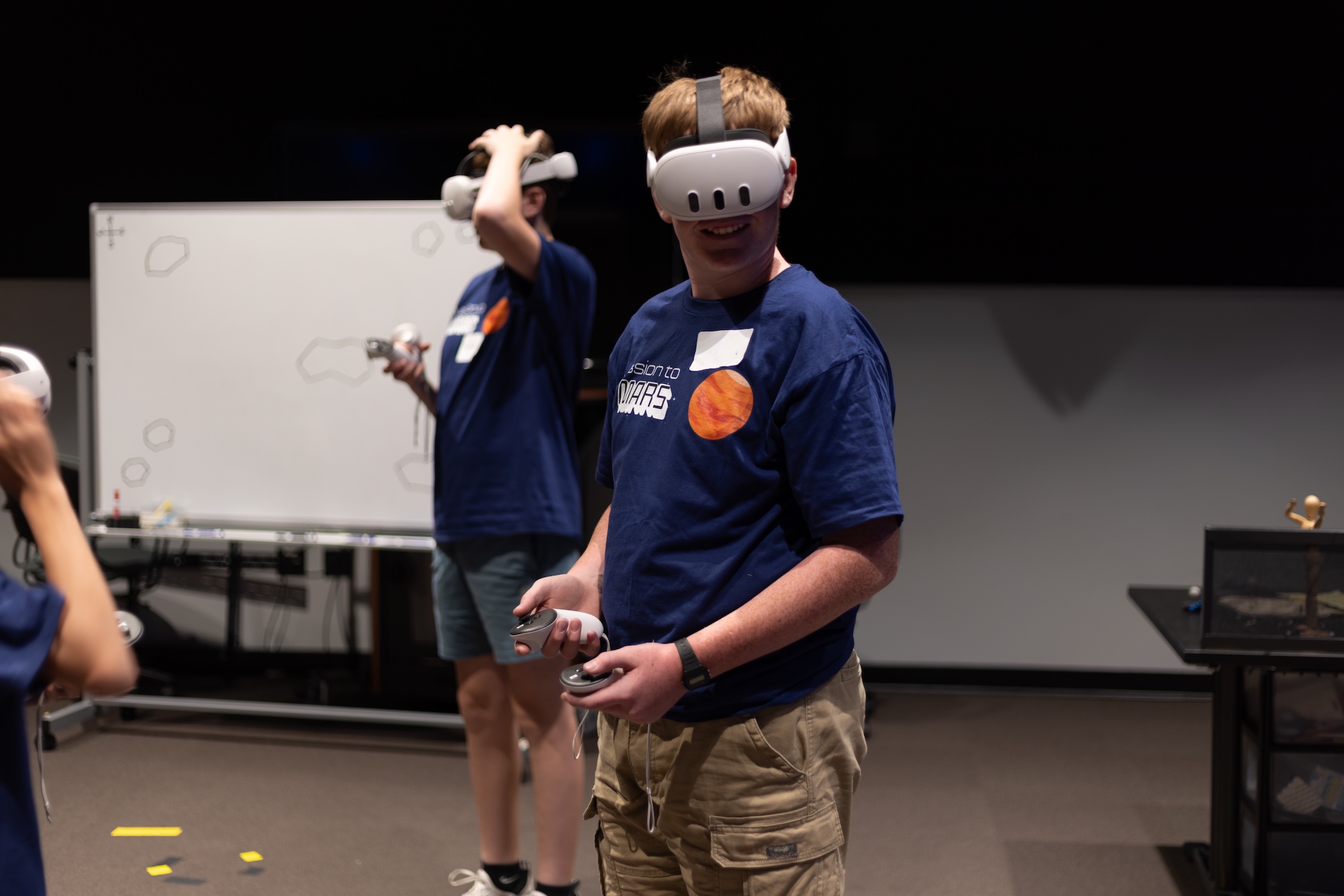
The first camp of 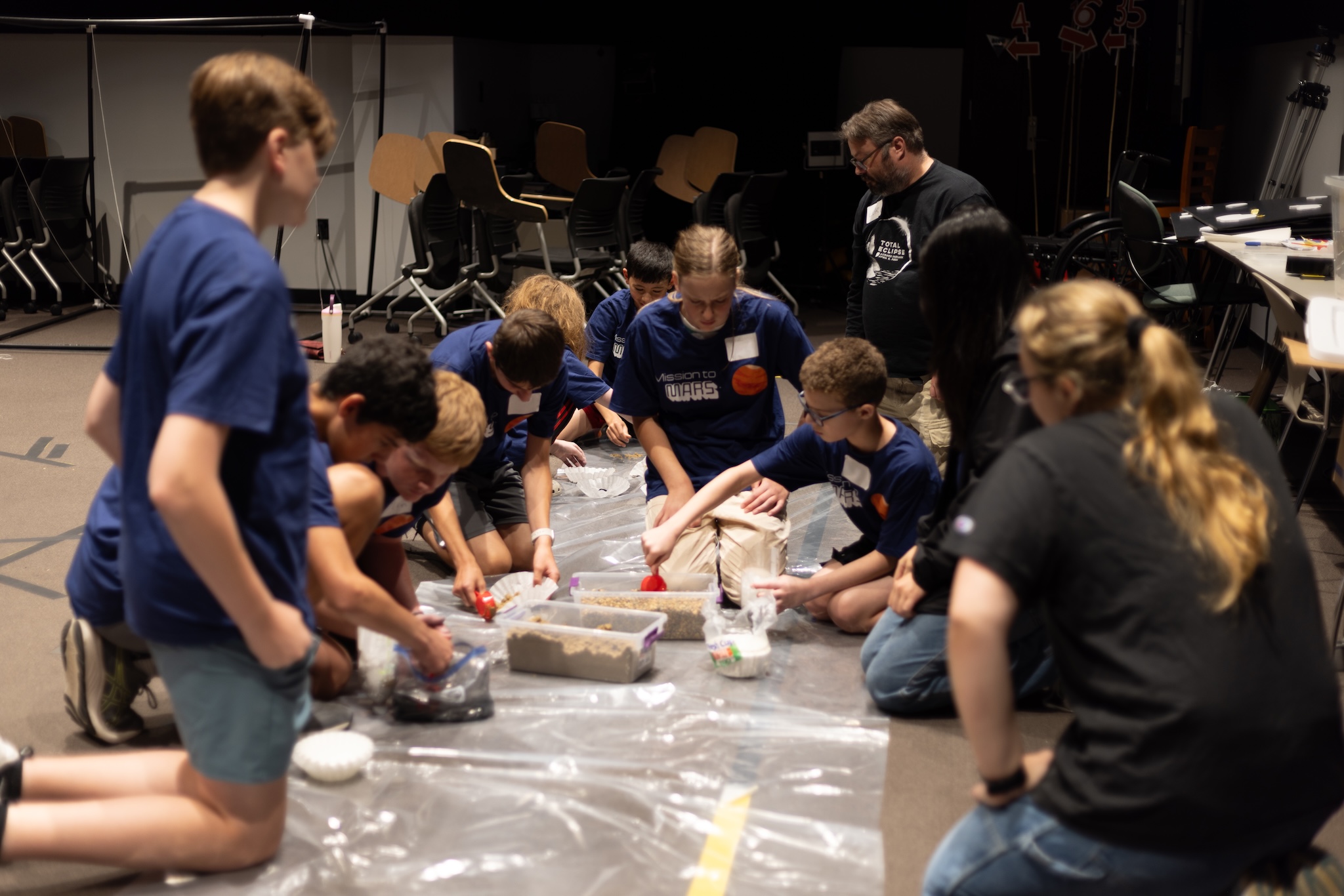 the season was the inaugural Mission to Mars Summer Day camps. Taking place on June 15, 16, and 17, the camp was open to incoming 7th-9th grade students, with each day being a singular day camp. Students arrived early on their selected date and were led through a full-day, hands-on experience designed to foster critical thinking and teamwork while teaching them about high-performance computing and STEM principles.
During Mission to Mars, campers stepped into the role of Mission Control during a simulated Mars mission in crisis. Through three interconnected, story-driven STEM challenges, the students investigated real problems, designed creative solutions, and collaborated with peers — all in a race to save the mission. Some of the challenges included a cable-driven motion simulation, a teamwork-focused blind navigation exercise, and developing a functional water-filtration system. The students were also able to experience the Envision Center’s CollabXR platform, a powerful virtual/augmented reality tool in which participants can observe 3-dimensional objects and data in a shared learning space.
“It was an incredible opportunity to help lead Mission to Mars through its pilot year and watch as we had the chance to inspire the first student campers in STEM,” says Banon Monroe, a CI-XP student who helped run the camps. “Seeing the students work together to tackle challenges was exciting, and I can’t wait to help put on the camp again next year!”
Code Explorers
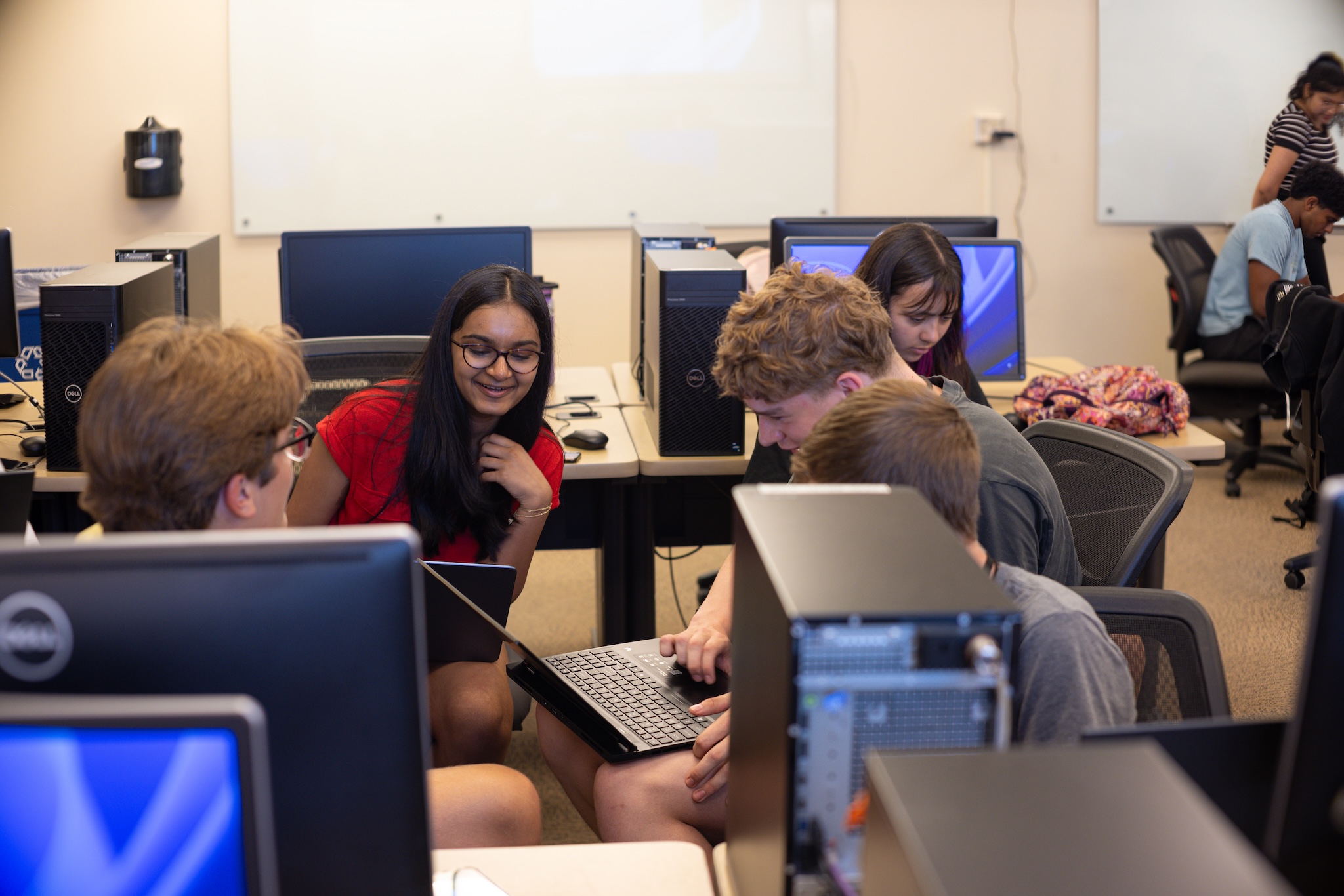
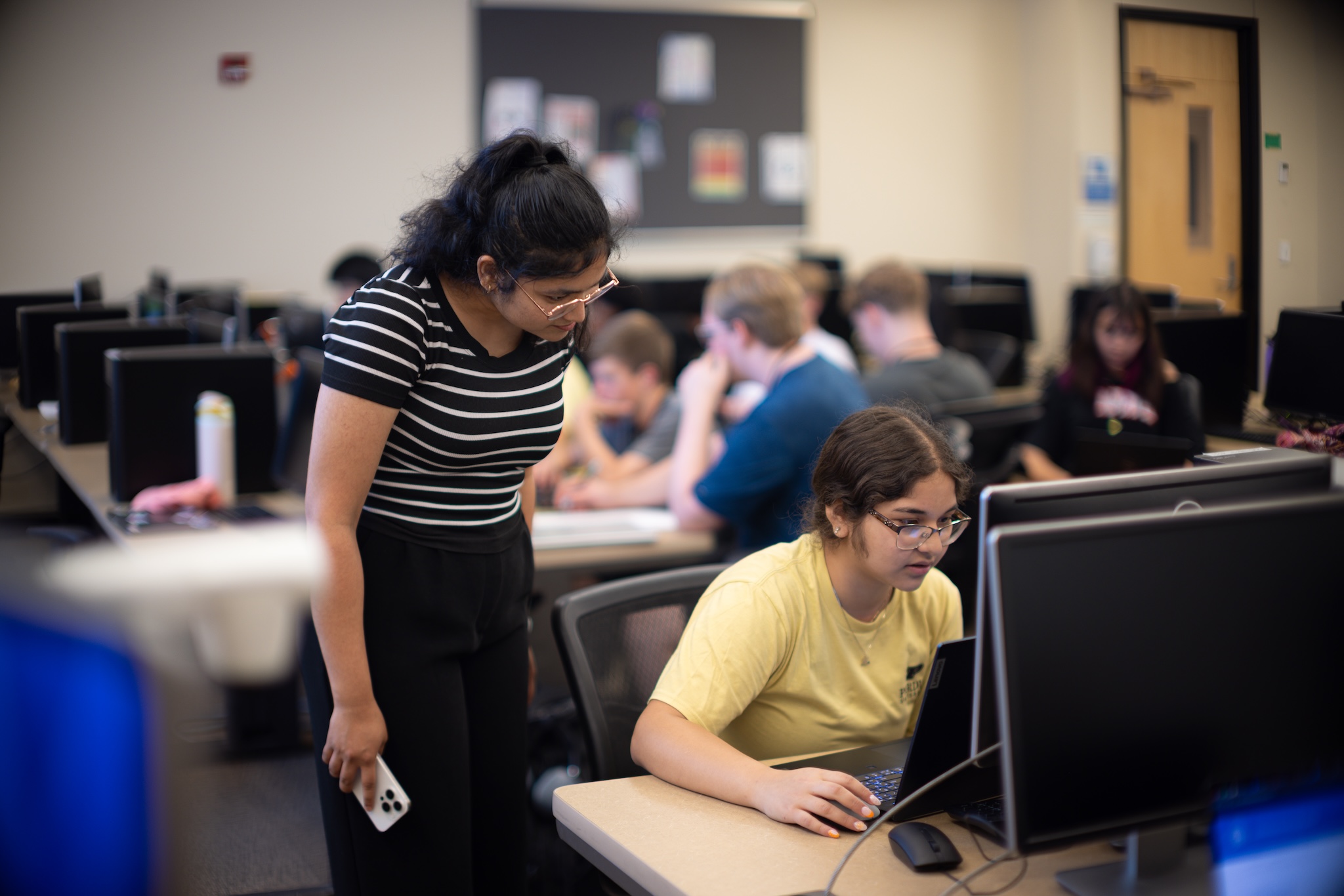
The next camp for the summer was “Code Explorers: Coding and AI.” Taking place from June 21-26, this camp was an immersive, week-long STEM program where the students engaged in coding, data analytics, and environmental science. RCAC hosted this alongside Purdue's College of Science as part of the Summer College for High School Students program. Campers engaged in hands-on projects, such as using microcontrollers and sensors to collect real-world data on factors like temperature, soil moisture, and air quality. They then learned about Python and block-based programming, and how to use coding to analyze and visualize data, giving them the power to transform their observations into compelling stories that highlight environmental challenges or successes in their own community. The students also explored the fundamentals of artificial intelligence (AI) and machine learning.
“The Coding Explorers Camp was an awesome summer experience!” says Nicholas Brasovan, a curriculum developer in the Department of Computer Science at Purdue, and one of the instructors for the camp. “Students explored Python fundamentals for data science, basic agentic programming, computer architecture, cloud computing, and ethics of technology. We had a series of hands-on labs hosted at the Lawson Computer Science building. We also partnered with RCAC and the Envision Center to deliver a gamified workshop on data science. This is our third iteration of the camp, and it just keeps getting better.”
CyberSafe Heroes
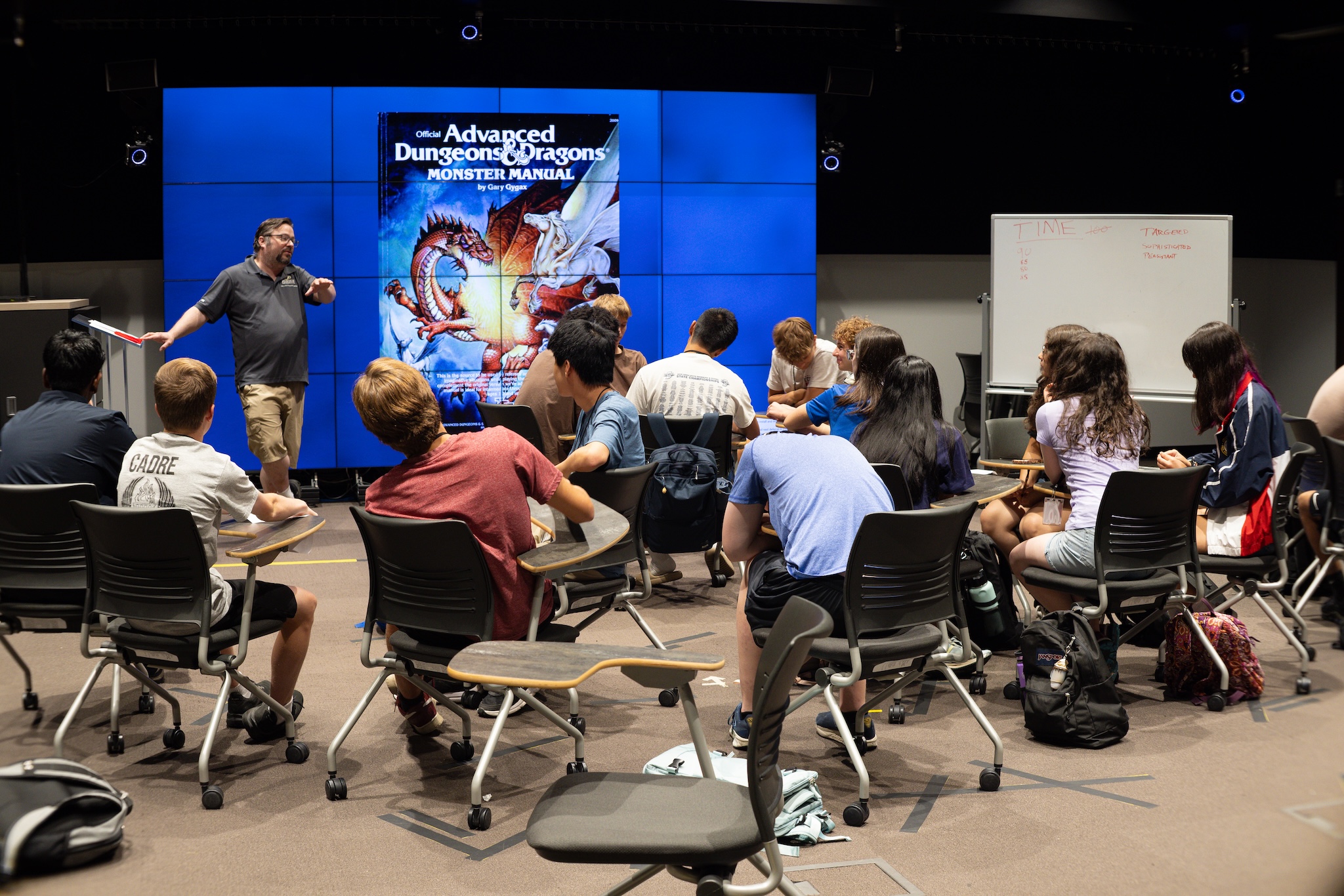
The final camp of 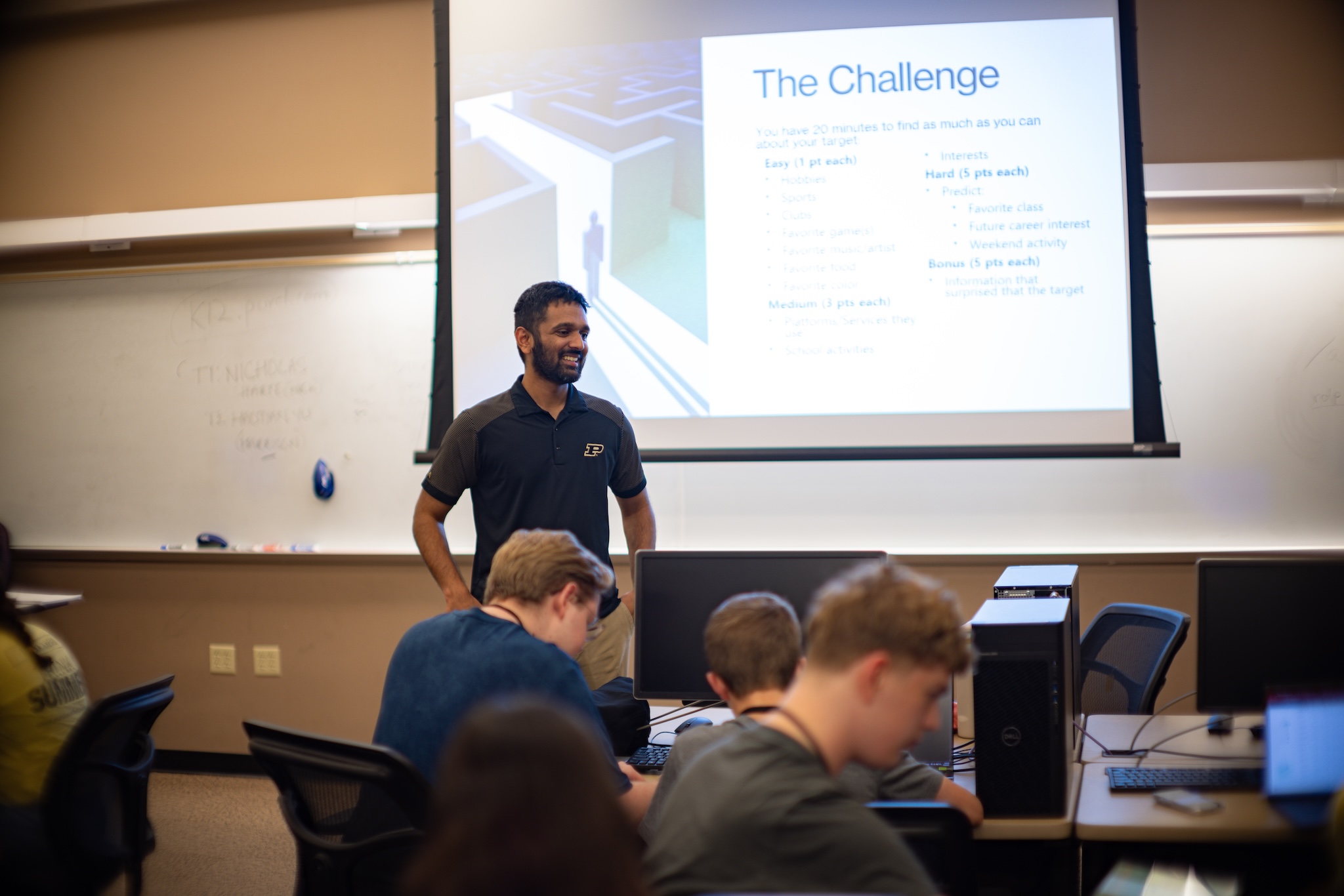 the summer, another summer college program that ran from July 12-17, was “CyberSafe Heroes: Empowering High School Students for a Secure Digital Future.” This camp focused on cybersecurity, introducing students to key concepts in ethical hacking, encryption, and online safety. Through hands-on labs and engaging activities, including cybersecurity escape rooms, ethical hacking simulations, and encryption challenges, the students explored fundamental cybersecurity topics and were equipped with essential digital skills. The campers also explored AI’s role in modern cybersecurity, learning how the tool is leveraged for both noble and nefarious purposes. Overall, the course provided an engaging and educational experience that helped inspire the cybersecurity professionals of tomorrow while empowering students to be secure in the digital world of today.
“CyberSafe Heroes was a great opportunity to introduce students to the exciting world of cybersecurity through hands-on learning,” says George Bailey, the director of cyberTAP at Purdue and one of the instructors for the CyberSafe camp. “From ethical hacking and password auditing to wireless security and incident response, students embraced every challenge with curiosity, creativity, and enthusiasm. It was inspiring to see them develop both technical skills and the confidence to become responsible digital citizens and future cybersecurity leaders. Oh, and the meme contest gave them the opportunity to poke some fun at me too, which I enjoyed greatly!”
Empowering Future Scientists
All three camps were great successes, introducing K-12 students to the world of STEM and computing while imparting critical-thinking skills and the practical knowledge needed to navigate our technology-driven society. Outside of specific summer camps, the outreach and engagement team at RCAC has been hard at work to promote STEM and HPC to as many students as possible. 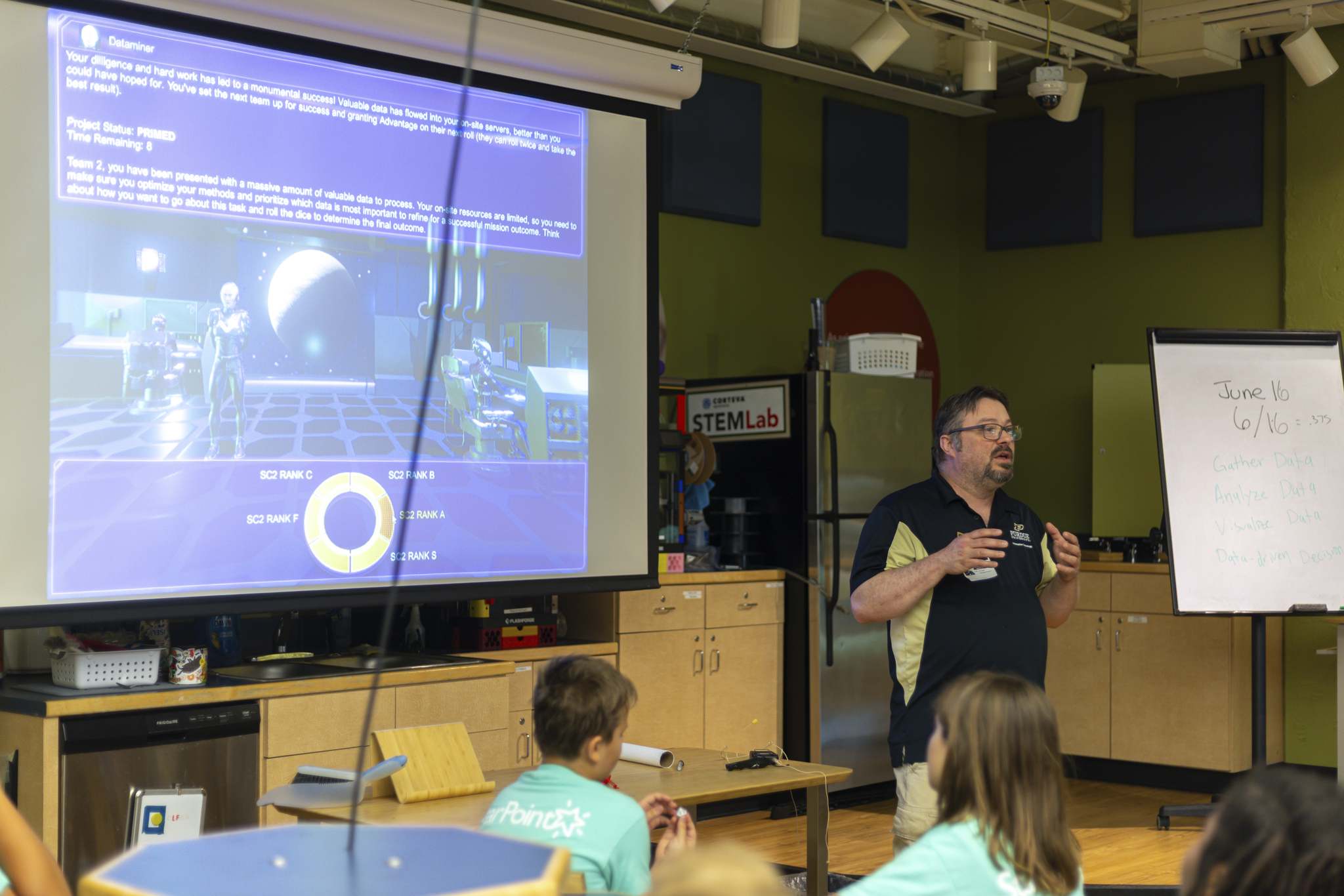 The world needs future professionals who are excited by science and research and who can lead us into brighter tomorrows. To cultivate this love of STEM, RCAC has held workshops at the Children’s Museum of Indianapolis, delivered a hands-on 4-H club experience, and given multiple student-focused presentations throughout the nation. The center also directly enhances student and educational outcomes through its hands-on workforce development pipeline, the CI-XP (Cyber Infrastructure - eXPerience) Program.
“Talent is everywhere; access isn't,” says Suzanna Gardner, the Lead Research Operations Administrator for Outreach & Engagement at RCAC. “The people who change a field aren't usually the ones who had the most to start with; they're the ones someone took a chance on. That's what these camps do. Whether it's coding, cybersecurity, or building something for Mars, we're showing kids it's possible. And then through CI-XP, they get real work on real systems. But none of this happens without the team. The instructors, the CI-XP students helping run these camps, the mentors who show up. That community makes it real for students. That's what actually changes trajectories.”
All three summer camps will return in 2027. To learn more about RCAC’s outreach and engagement activities, please visit: RCAC Outreach and Engagement
RCAC would like to thank these partners and volunteers for contributing both their time and energy and making these camps possible: Nicholas Brasovan, George Bailey, Amanda Warren-Glowe, George Takahashi, Suzanna Gardner, Amari Gardner, Ava Sperazza, Bithi De, Tomas Ratkus, Luke Monroe, Taylor Graham, Samantha Lee Walker, Eric Adams, Michael Allan Carlson, Nannan Shan, Manasa Vemuri, Damieon Brown, Smriti Bhatt, Madiha Fathima, Banon Monroe, and Courtney Bragg.
To learn more about CI-XP opportunities, please visit: CI-XP Student Program
RCAC operates the centrally-maintained research computing resources at Purdue University, providing access to leading-edge computational and data storage systems as well as expertise and support to Purdue faculty, staff, and student researchers. To learn more about HPC and how RCAC can help you, please visit: https://www.rcac.purdue.edu/ or reach out to rcac-help@purdue.edu to request a consultation.
These camps were supported by the Anvil supercomputer. Anvil is one of Purdue University’s most powerful supercomputers, providing researchers from diverse backgrounds with advanced computing capabilities. Built through a $10 million system acquisition grant from the National Science Foundation (NSF), Anvil supports scientific discovery by providing resources through the NSF’s Advanced Cyberinfrastructure Coordination Ecosystem: Services & Support (ACCESS), a program that serves tens of thousands of researchers across the United States. Anvil also supports advanced artificial intelligence research as an official resource provider of the National Artificial Intelligence Research Resource (NAIRR) Pilot.
Researchers may request access to Anvil via the ACCESS allocations process or through the NAIRR allocations process. More information about Anvil is available on Purdue’s Anvil website. Anyone with questions should contact anvil@purdue.edu. Anvil is funded under NSF award No. 2005632.
Written by: Jonathan Poole, poole43@purdue.edu