

News & Events
- There are no upcoming Student Events at this time.
Meet Your Mentor!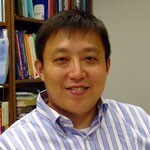
We sat down with our 2025 Anvil REU Mentors to discuss their role at RCAC, what their REU students will be working on, and much, much more. Keep reading below to learn more about your mentor.
David Liu
Please introduce yourself
David Liu, PhD in Computer Science from The Ohio State University
What do you do?
I am an Associate Professor of Computer Science and Lead Research in Quantum Information Science. I serve as Lead PI in NSF-funded Project QC4MC (Quantum Computing for Materials Science and Chemistry.
Why would I come to you for help?
Understand all aspects of Computing Science from Computer Networking, Cyber Physical Systems, IoT, Cybersecurity, AI/ML, Blockchain Technology, Quantum Computing, Quantum Networking, Quantum Security, Computational Mathematics, Agile Software Development, and Algorithms
What's one professional skill you're currently working on?
I am working on integrating HPC with Quantum Computing and AI
What's your go-to productivity trick?
Fist principle – down to the essentials of each problem
What behavior or personality trait do you most attribute your success to, and why?
Persistent and collaborative with others
What led you to this career?
My sabbatical in Fall 2020 was interrupted by Covid 19, I found excitement and took a dive in Quantum Computing.
What are you currently excited about in your job?
I am working in integrated Quantum Computing, HPC, and AI to support new material design, drug discover, logistic optimization, engineering design, biological and medicinal science and engineering, which are not possible with classical HPC.
How long have you been on the Anvil team/at RCAC?
2.5 years
Education, publications, engagement (groups part of), etc...
PhD in Computing Science, MS in Operations Research and Control Theory, BS in Mathematics and Statistics
Why did you decide to become a mentor for the REU program?
Workforce Development for Quantum Computing, AI, and HPC
Develop HPC supported Quantum Ain training framework for NSF CyberTraining Projects
-
What do you hope the REU gets out of the program?
Learn about HPC, AI, Quantum Computing basics and their integration and develop HPC tools to help learn and access Quantum Computing simulators and hardware devices
-
How can this help them in their college career?
Technical, communication, and project management skills will be developed. These are essential skill for all majors
-
How can this help them in their professional career?
Quantum Computing and AI are important for the future jobs
What value do you get from being a mentor for the REU program?
Learn about how a beginner can develop Quantum Computing, AI, and HPC skills.
Develop tools for future CyberTraining and other QC/HPC/AI related workforce development workshop and curriculum development
What will your REU students be working on specifically?
Step into the future of computing with this hands-on project that connects Quantum Computing, Artificial Intelligence (AI), and High-Performance Computing (HPC)! As part of the Anvil REU project team, you'll use Open OnDemand to create interactive tools and learning materials that make cutting-edge Quantum Computing and AI more accessible for students, researchers, and professionals in Science, Engineering, and Medicine (SEM). You'll explore how classical and quantum computing can work together, through quantum simulation, machine learning, and optimization, to tackle some of the biggest challenges in modern research. A working prototype is expected to debut in Spring 2026 to support the Quantum Computing for Materials Science and Chemistry (QC4MC) Summer School. Your contributions will help shape a larger NSF CyberTraining project proposal (QAI4SEM), expanding the impact of Quantum AI education and research nationwide. This is an exciting opportunity to: (1) Build real tools that advance Quantum AI learning and research, (2) collaborate with experts in HPC, AI, and Quantum Computing, and (3) gain experience that bridges computing, science, and innovation.